
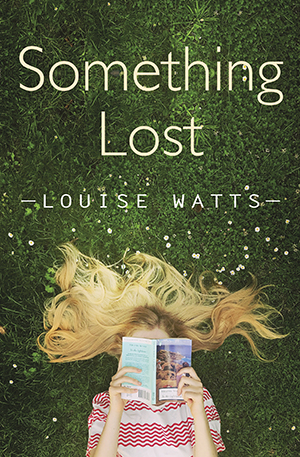
Something Lost is a novella about desire and unfulfilled potential. A young girl attempts to escape the drudgery of her life at home in books and in a relationship with her alcoholic English teacher. Meanwhile, her parents’ marriage is coming apart and domestic responsibilities build up.
Something Lost seeks meaning in likely and unlikely places: poems, definitions, recipes, jokes, facts. It moves between innocence and experience as high aspiration is undercut by emotional realities, and an underlying sadness is revealed. Although a coming-of-age story, it is not clear that anyone ever gets the chance to grow up.
A clever and extremely poignant first-person tale of family strife and growing into adulthood, where the reader enjoys reading between the lines of the teenage girl’s narration. The voice is pitch-perfect, the details sensitively chosen to evoke adolescent experience, understanding both less and more than it admits. Louise Watts has created a beautiful novella – funny, disarming, and deep.
~Michael Loveday, author of Three Men on the Edge
A beautifully woven story of life in the shadows – richly layered, filled with pathos and poetry and yearning. Its narrator’s quiet voice enchants and disturbs, and shines with patient resilience. It is a voice I would happily follow anywhere.
~Gail Anderson, winner of the Scottish Arts Trust Story Award, Reflex Fiction 2019 and Winchester Writers’ Festival 2018
Paperback, ISBN 978-1-912095-12-4, 133mm x 203mm, 66 pages.
£8.49 GBP
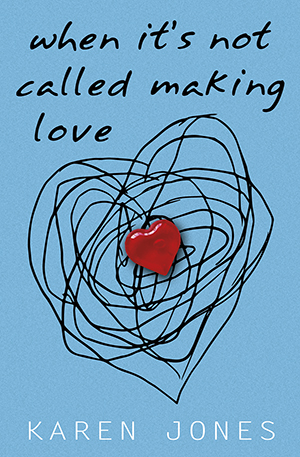 Reader, do not be fooled. The brevity of this novella-in-flash belies the breadth and scope of its subject matter. In assured, clear-eyed prose, Karen Jones quickly immerses us into the world of her loyal, smart, brave protagonist. Bernadette is a child who becomes a woman, a bully who becomes the bullied, forever seeking the birthright we all share, that of simple tenderness and understanding. When It’s Not Called Making Love is a breathless, breathtaking, unflinching coming-of-age debut you will not want to miss.
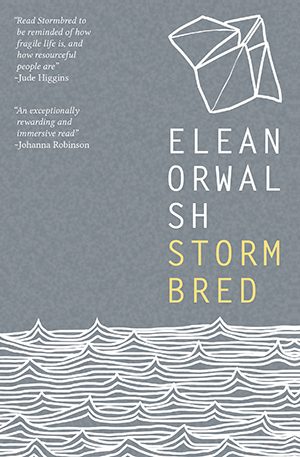 Eleanor Walsh is an assured storyteller. In Stormbred she reels the reader into the life of Ruby, a young Cornish girl searching for connection – to the world and to others. Walsh explores with perception these themes of connection and disconnection, embedding them skilfully in both the form and the language of the novella. An exceptionally rewarding and immersive read.
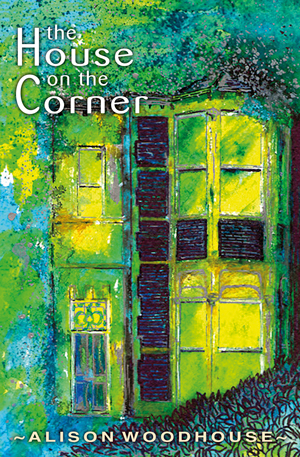 In The House on the Corner, personal tremors large and small unsettle the foundations of a middle-class, nuclear family at the end of the 1980s. Alison Woodhouse has a novelist’s gift for capturing in words the currents and eddies of intimate, private thought. Her characters exist in a world of subtle, shadowy shifts – try as they might to understand what’s happening around them, they are shaped by forces beyond their comprehension and control. Luckily for the reader, Woodhouse knows exactly what she’s doing. She renders her characters’ disappointments and joys in paragraph after paragraph of exquisite prose.
 A remarkable story of a woman’s life in an unnamed city in the aftermath of a series of earthquakes. It’s written with claustrophobic, relentless and urgent conviction. What’s most compelling is how the story is gleaned mostly through flashbacks, as though, like the city’s buildings, it’s been broken into fragments and we are picking our way through rubble. Gradually, like rescue workers, we uncover the situation of a hospitalized husband, a lover lost to a building’s collapse, and the tender domestic bonds the woman shares with her father and his colleague. This is a dark, oppressive story but, through it, the writer explores how humanity responds to crisis – and has produced a metaphor for our own times.
 Drawing from a range of youthful voices and adventures, Sugar Mountain explores how children learn to deal with hard truths about themselves, and others, and the great wild world. From roller-skating away the grief of a parent, to soapy pranks by a band of camp bullies, to confronting an angry mass of waterfowl in the throes of a pillow fight, each chapter offers a tiny ticket back to a time when the world only seemed less complicated.
 Holmes conjures the best qualities of both the short story and the novel to create a lyrical evocation of the beauty, pain, and wonder of growing up. Don’t Tell the Bees oozes with love and conflict and of a girl’s passage into womanhood. Each chapter is a perfect little stand-alone flash story, a stunning example of what the form can accomplish. The reader is thrust heart-first into the difficult life of No-more and a world of unforgettable characters carved tenderly and precisely. Holmes recreates, in sensory-soaked detail, the world of a small French village near the Second World War. I marvel at how the author blends each stand-alone story into one masterful whole: poignant, compassionate, and profound in emotional impact.
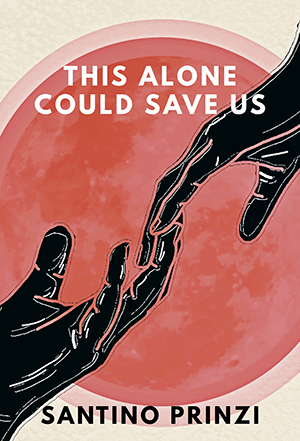 ‘With This Alone Could Save Us, Santino Prinzi has fashioned a collection of small, smart fictions that read large. Here is work undergirded by innovation, incisive wit, and a keen ability to navigate terrain that is personal, and at once universal to us all.’
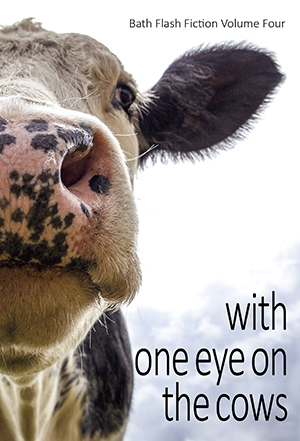 This anthology, the fourth from the Bath Flash Fiction Awards, contains 137 micro fictions of 300 words or under by writers from all over the world. The stories cover many topics: relationships in all their forms, familiar, strange, tragic or benign; war and displacement; the climate emergency; historical subjects; the fantastical and surreal. So many different styles and themes. So much to enjoy, make you think, and inspire you to write your own stories.
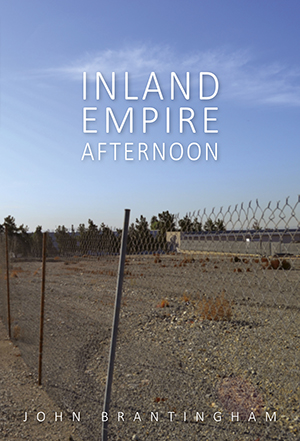 This novella is a tour de force of narrative manipulation. Set during an afternoon in one urban area (the Inland Empire, California) the story leaps from one resident to another in story after story, offering a highly diverse ensemble cast of over 40 characters. Virtually every flash is deftly linked to the one that precedes, picking up a thread of narrative or location, and centred around certain key events – a hold-up, an earthquake, a wedding, a fire etc. The effect is to create a mesmerising portrait of the daily trials and tribulations of an urban community. Brilliantly conceived and skilfully written, this is an unusual and deeply impressive novella-in-flash.”
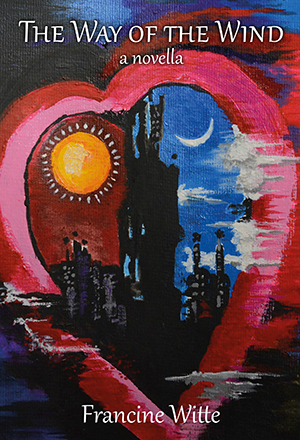 An unforgettable voice narrates this novella-in-flash, a jilted lover who is obsessed with her ex, struggling to find a settled place to live, and trying to find a way to make peace with both her disapproving mother and the memories of her estranged father. It’s impossible to resist this flawed narrator’s honest, raw humanity. Immediate, alive, sharp, psychologically astute – there is a kind of casual poetry in the writing. On virtually every page there are moments of expressive genius and flair that will either have you laughing or will tug hard at your heart.
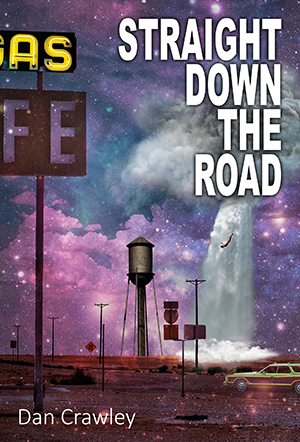 The stories in this collection by Dan Crawley fit together like beautiful puzzle pieces to create a portrait of a broken family on the world’s worst road trip: a father dragging his wife and children into his dreams; a mother wishing for her own kind of freedom; their children, trapped in their parents’ narrative, wanting to create their own. Each piece is its own story, powerful in its own right, but together they create a beautiful, heartbreaking whole.
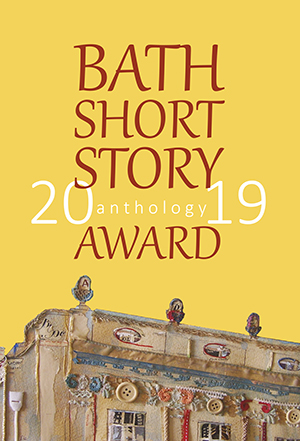 The twenty distinctive stories in our seventh anthology reveal the secrets, pains and pleasures of being human. Set in different times, cultures and places they reflect universal truths and beg to be read.
 82 micro fictions from participants and presenters who came from around the world to the third Flash Fiction Festival UK which took place in Bristol, UK in June 2019. Dip in to discover short short stories – all 250 words or under – in different styles and on many different themes from the personal to the political.
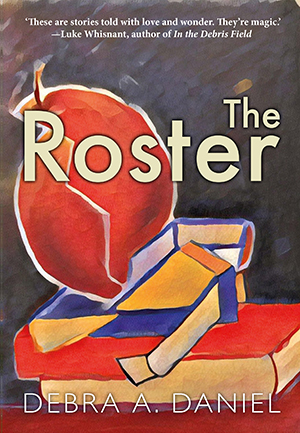 An ‘ensemble cast’ novella with a fresh and original concept — a sequence of stories about a teacher’s pupils at a school. The students’ eccentricities, rebelliousness and vulnerabilities are depicted with warmth, fondness, and very often, an absolutely heart-breaking poignancy, as in the case of the child with brittle bones, or the young boy grieving his sister. There is black humour too, in places, and endings that are intensely lyrical. The characterisations are superbly individualised, vivid, inventive and memorable, and are written with beautiful variety of expression. A novella of immense charm that has real emotional substance.
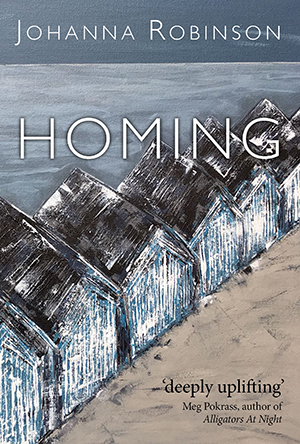 ‘This novella-in-flash, a historical fiction encompassing the Second World War and telling the story of a Norwegian family from 1933 to 1970, has more epic sweep than many novels. A powerful novella of real substance, bold technique and readerly appeal, it’s the kind of literary fiction that would grace the shelves of any bookstore and find a passionate readership.’
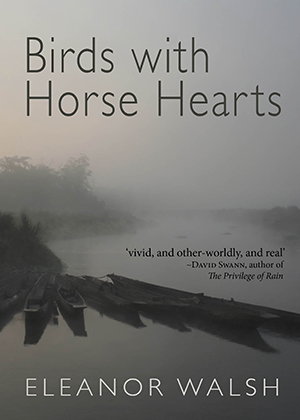 Avery, a young widow from Iowa, travels to Nepal to connect with her late husband’s roots. Though she knows no more than that his village was called Baghmara, she’s willing to visit every Baghmara in the country if she must. But when she meets a young Nepali woman, Putali, and her mother, Khusbhu – two women also struggling to build new lives for themselves – Avery becomes more embroiled in the chaotic energy of the living than the histories of the dead, pursuing a connection far deeper than the one for which she’d been searching. Birds with Horse Hearts explores the entangled lives of three women as they navigate grief, freedom, and their own journeys to find people to call family and places to call home.
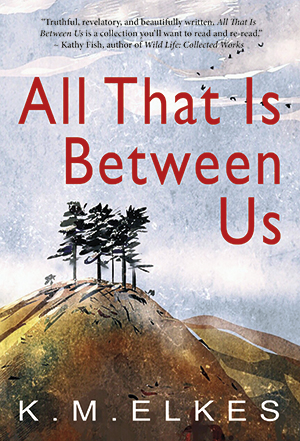 This collection of flash fiction stories explores the complex fragility of human relationships, both the challenges of belonging and how much we risk to avoid being alone. It is a book of moments, evoking the beauty and comfort that connection brings…and the pain when it is severed.
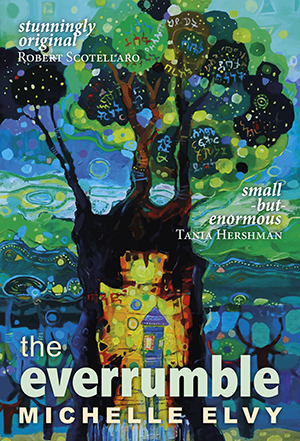 the everrumble is a poetic imagining of intense focus and sweeping ideas. Zettie’s story is fluid and in motion, transcending geographies and time. She stops talking, at age seven, and starts to listen – to the worlds she finds in language and books, and to the people and places she encounters as she moves across continents. Her silence connects her to people, to nature and to the elemental world. Magical and beyond boundaries, this collection focuses on small fragments, taking Zettie, and the reader, inevitably to the place where human history began.